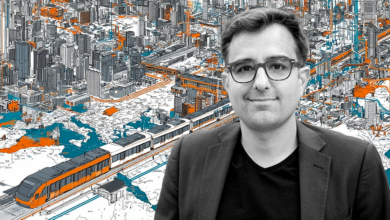
AUSTRIA: ANOTHER EARTH, the startup building a simulation of the planet, raises €3.5 million
To contact us: editorial@fw.media


In today’s space economy, Earth observation rests on a paradox. Satellites have never produced so many images of the planet, yet the artificial intelligence systems designed to analyse them still lack suitable training data. This is precisely the gap targeted by Austrian startup Another Earth, which is developing technology capable of generating entirely artificial satellite imagery to train AI models used in environmental and geospatial analysis.
The company has announced a €3.5 million funding round to accelerate the deployment of its synthetic data platform for Earth observation. Behind this relatively modest investment lies a broader ambition: to build a simulation infrastructure capable of training artificial intelligence models across the entire surface of the planet.
From observing the Earth to simulating it
Over the past 15 years, the space ecosystem has undergone a profound transformation. Commercial satellite constellations have given rise to a new geospatial data industry. Companies such as ICEYE have demonstrated that radar imagery of the Earth can be produced at scale for applications including environmental monitoring, natural disaster management and the surveillance of critical infrastructure.
Analysing these images now relies heavily on artificial intelligence. Machine-learning models, however, require vast quantities of annotated data, which are often difficult to obtain. In many parts of the world, satellite images are scarce, expensive or insufficiently labelled to train algorithms effectively.
Another Earth’s technology is specifically designed to address this shortage. The startup combines generative AI with 3D modelling to produce synthetic satellite images together with associated geospatial information, including land-use data and elevation models. These datasets can then be used to train automated environmental analysis systems for applications ranging from deforestation detection and agricultural monitoring to infrastructure assessment.
The aim is therefore not so much to replace satellites as to supplement real-world observations with simulated data.
Generating data where none exists
In many AI projects focused on the planet, the main difficulty lies not in the algorithm itself but in the availability of training data. High-resolution satellite imagery can be expensive, while preparing it often requires particularly time-consuming manual annotation.
Synthetic data offers a way around this constraint. By generating fully labelled artificial images, teams can train their models on specific scenarios, including remote locations, rare phenomena and extreme events.
Another Earth’s platform can produce large volumes of simulated satellite imagery, complete with automatically generated labels and segmentation maps. This approach makes it possible to create datasets for situations that are difficult to observe in the real world, such as certain environmental disasters or geographical areas with limited satellite coverage.
The emerging players in the Earth observation economy
Another Earth operates in a market taking shape at the intersection of three segments: Earth observation, AI-powered geospatial analysis and synthetic data generation.
At the first level, companies such as Maxar Technologies, Planet Labs and BlackSky operate satellite constellations to produce imagery of the planet and provide geospatial intelligence services. These data then feed a second layer of companies specialising in analysis and environmental applications. Kayrros, for example, uses satellite imagery and artificial intelligence to monitor energy-related emissions and industrial infrastructure worldwide.
A new generation of startups is now seeking to address one of the sector’s main bottlenecks: the shortage of training data for AI models. Platforms such as AgileView, for instance, are developing simulation engines that can generate 3D environments and produce artificial aerial and satellite imagery for machine-learning applications.
Within this ecosystem, Another Earth is positioning itself in this third layer: the generation of synthetic geospatial data designed to supplement and enrich information collected by real satellites.
Funding to accelerate deployment
To support this strategy, the startup has raised €3.5 million. The round brings together new investors and several existing backers, including Rockstart, Inovexus, Stamco AG and Wake-Up Capital. The company has also received support from Austrian public bodies such as the Austrian Research Promotion Agency and Austria Wirtschaftsservice.
Another Earth plans to use the funding to accelerate the deployment of its Synthetic Data Engine, particularly in regions where environmental data remain scarce, including parts of Latin America and sub-Saharan Africa.
Based in Vienna, Another Earth develops technology combining generative artificial intelligence and 3D modelling to produce synthetic geospatial datasets for training environmental analysis algorithms. The company was founded by CEO Maya Pindeus and CTO Felix Geremus, a specialist in 3D technologies and geographic information systems.