After VLC, French entrepreneur Jean-Baptiste Kempf wants to build the nervous system for robots
To contact us: editorial@fw.media
Artificial intelligence is gradually learning to act upon the physical world. Yet between a model capable of making a decision and a machine capable of executing it, an essential technological layer remains largely absent.
Autonomous drones, industrial robots, driverless vehicles and robotic medical systems must continuously transmit video streams, sensor data and commands within a few milliseconds. Today’s internet infrastructure, designed for communication and content distribution, was never optimised to meet such requirements.
As the artificial intelligence industry moves towards robotics, autonomous systems and defence applications, this issue is becoming strategically important. After models, semiconductors and data centres, a new category of companies is now attempting to build the infrastructure that will enable AI to interact with the real world.
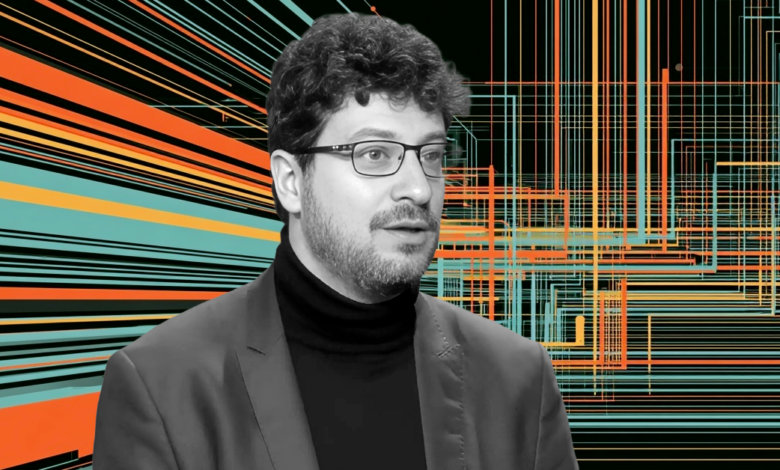
This is the technological layer targeted by Kyber, a company founded by Jean-Baptiste Kempf, creator of the VLC media player and a principal architect of FFmpeg, one of the world’s most widely used video-processing software libraries. The company has announced a $5 million seed round, equivalent to approximately €4.3 million, led by Lightspeed Venture Partners with participation from Ovni Capital and Kima Ventures.
Behind the transaction lies an ambition extending far beyond robotics software. Kyber intends to develop the real-time infrastructure that will allow both human operators and autonomous agents to control, observe and train machines from anywhere in the world.
Infrastructure designed for real time
Most existing systems currently rely on technologies developed for the consumer internet, particularly WebRTC, a protocol widely used for video communications.
These tools were designed to enable communication between people. They were not built to coordinate robots, drones and autonomous systems operating continuously inside critical environments.
In the physical world, a few hundred milliseconds can represent several metres travelled by a drone or autonomous vehicle before a command is executed. In certain industrial, medical or military applications, such a delay is incompatible with operational requirements.
Kyber claims it can reduce this latency to approximately eight milliseconds by synchronising all the streams required to operate an autonomous machine within a single infrastructure.
The objective is to provide developers with a unified software layer capable of simultaneously managing video, audio, sensor data and control commands while maintaining temporal consistency across these different streams.
The same logic as VLC and FFmpeg
Jean-Baptiste Kempf’s ambition follows directly from the projects on which he built his reputation. VLC and FFmpeg did not succeed as consumer products in the conventional sense. They became reference infrastructure, integrated into millions of applications, services and devices worldwide.
Their distribution relied on open source, encouraging adoption among developers and companies. Over time, these software components became de facto standards across the global video ecosystem.
Kyber has adopted an “open-core” model. Part of the technology is released as open source to encourage adoption throughout the ecosystem, while advanced features, administration tools, support and commercial licences provide the basis for enterprise monetisation.
For investors, this strategy is particularly attractive. In the software industry, technical standards established at the beginning of a technology cycle often capture a significant share of the value created across the entire ecosystem. The question is no longer how many robots or drones will be sold, but how many will eventually use the software layer connecting them to their operators, sensors and artificial intelligence systems.
A thesis attracting AI investors
Lightspeed’s backing reflects this interpretation. The US fund has made numerous investments in artificial intelligence infrastructure, enterprise software and technologies related to autonomous systems. For Antoine Moyroud, a partner at Lightspeed Venture Partners, the diagnosis is straightforward: models are progressing rapidly, but the infrastructure required to connect them to the physical world remains significantly behind.
This analysis reflects a broader industry trend. Having financed models, GPUs and data centres, investors are beginning to focus on the software layers that will enable autonomous systems to operate in real-world environments.
Robotics, defence, industry and telecommunications are emerging as the first target markets.
Infrastructure for the machine economy
The rise of autonomous systems could fundamentally alter the very nature of digital infrastructure.
The internet of the past two decades was designed primarily to connect people, content and applications. The emerging economy will need to connect millions of machines capable of observing their environment, making decisions and acting autonomously.
In this context, communication protocols, real-time infrastructure and control layers could become as strategically important as cloud platforms were to the software economy.
This is the hypothesis behind Kyber’s wager. Having helped build some of the foundational components of digital video, Jean-Baptiste Kempf is now seeking to develop one of the infrastructure layers that could support the next phase of artificial intelligence: a successor to WebRTC for the age of robots, drones and physical AI.