
Why Europe could become the world’s largest market for humanoid robots
To contact us: editorial@fw.media

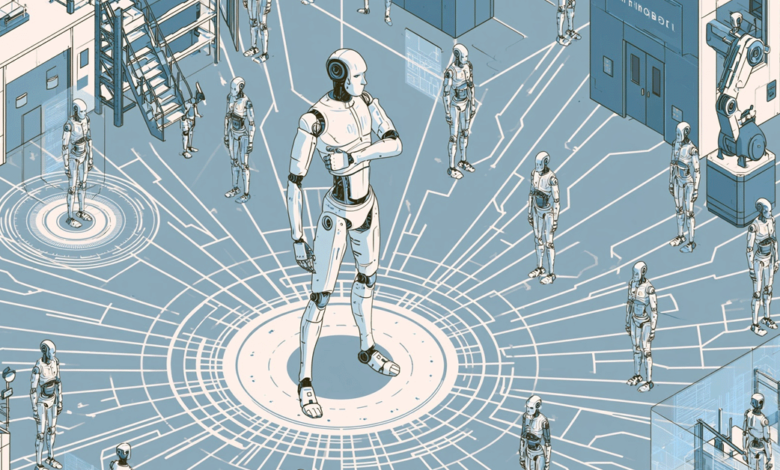
Europe could become a priority market thanks to the combined effects of demographic ageing, labour shortages, high employment costs and a dense industrial base.
Initial deployments are expected to focus on warehouses, factories and logistics before expanding into the home.
Value is gradually shifting from mechanics to software: manufacturers are now seeking to develop a genuine operating system (OS) capable of powering robots made by different companies, much like Android did for smartphones.
Safety, reliability and the ability to operate for several hours without incident will become more decisive criteria than spectacular demonstrations.
The stakes extend far beyond robotics: humanoids could become critical infrastructure, on a par with cloud computing, AI and semiconductors.
Europe will probably not dominate production volumes, but it could become the leading market for mass adoption and a testing ground for future use cases, provided it succeeds in building a sovereign industrial and software ecosystem.
Humanoid robots are no longer merely a technological showcase. Over the past two years, announcements have multiplied: Tesla is accelerating the development of Optimus, Figure AI is deploying its first robots in industrial settings, while dozens of Chinese manufacturers are emerging with the ability to produce humanoids at ever-lower costs. At first glance, the competition appears to be a contest between American software capabilities and Chinese industrial capacity.
Europe rarely features in this equation. It has neither the equivalent of the Silicon Valley giants nor Shenzhen’s vast production chains. Yet the commercial success of a humanoid robot will depend not only on its technical performance or price, but above all on where it can deliver the fastest return on investment.
Europe offers particularly favourable market conditions for their deployment: an ageing population, chronic labour shortages, high wages and a dense industrial base. These factors could make Europe the world’s leading robotics market.
Indeed, the continent combines several conditions rarely found elsewhere: a rapidly ageing workforce, labour shortages already affecting industry, logistics and services, some of the world’s highest employment costs, and a dense, highly automated industrial base that still relies on many tasks that are difficult to automate. In such a context, Europe could become the world’s largest market for humanoid robotics.
Humanoids enter a new economic category
For nearly fifty years, industrial robotics followed a relatively simple logic: robots were designed to repeat a single task endlessly within a perfectly controlled environment. Articulated arms in automotive plants, welding machines, painting robots and palletising systems were each designed for a specific function, required dedicated programming and involved investments largely reserved for major industrial groups.
The ambition of humanoid robots is no longer to automate a single operation, but an entire job role. Thanks to advances in artificial intelligence, computer vision and learning from demonstration, these machines can now acquire new skills without being reprogrammed line by line. A task can simply be demonstrated to them, enabling them to learn progressively how to reproduce and then optimise it.
This evolution brings the robot closer to a co-worker than a specialised machine. Whereas a conventional industrial robot required the working environment to be redesigned around it, a humanoid robot is built to operate within infrastructure already designed for humans. Stairs, door handles, standard tools and workstations become immediately compatible. The humanoid is no longer a dedicated machine, but a multipurpose platform.
This shift is decisive: the question is no longer how much a robot costs, but how many different jobs it will be able to perform over its lifetime.
Demographics are turning Europe into an ideal testing ground
Labour shortages are the argument most frequently cited to justify the rise of humanoid robots. Europe is ageing rapidly. Its working-age population is growing much more slowly than its retired population, while fertility rates in most countries remain well below the replacement threshold. This trend is mechanically reducing the pool of workers available to industry, logistics and services.
Unlike previous waves of automation, the issue is no longer simply one of replacing jobs to cut costs. In many sectors, companies are already struggling to recruit despite rising wages. The problem is particularly acute in physically demanding, repetitive jobs and roles involving irregular working hours.
Logistics centres illustrate this trend perfectly. Staff turnover remains particularly high because of demanding working conditions and the physical strain involved. Manufacturers are therefore looking less to reduce headcount than to stabilise production in the face of a lasting shortage of applicants.
In this context, the humanoid robot becomes a tool for operational continuity rather than merely another lever for productivity.
The higher the cost of labour, the faster robots become profitable
In economies where labour costs remain low, replacing an operator with a robot is difficult to justify economically. Conversely, in countries where wages, social security contributions and recruitment constraints are high, the break-even point can be reached much faster.
This is precisely the situation in Europe. For an industrial company, a humanoid robot capable of performing several thousand hours of work a year could pay for itself within a few years, or even sooner depending on the application. The calculation becomes even more favourable when recruitment, training, workplace accidents and staff turnover are taken into account.
This logic explains why several young European companies now regard the continent as their priority market.
An industrial powerhouse that is often underestimated
Europe also retains a major advantage: its productive base. Germany remains one of the world’s leading manufacturing powers. France maintains strong positions in aerospace, nuclear energy, pharmaceuticals and industrial luxury goods. Italy remains a major player in mechanical engineering and capital goods. The Netherlands operates some of the most efficient logistics platforms in the world.
All these sectors share one characteristic: they still employ hundreds of thousands of operators performing tasks that combine object manipulation, movement and simple decision-making. These activities had previously remained beyond the reach of conventional automation but are gradually becoming accessible to a new generation of robots.
Humanoids will therefore not replace the giant industrial robots already operating in factories. Instead, they will fill the grey areas of automation: order picking, supplying production lines, materials handling, quality control, light assembly and internal logistics.
It is precisely this complementarity that could accelerate adoption. European companies already possess the infrastructure, production lines and operational requirements. What they now lack is a sufficiently versatile machine capable of working in areas where traditional robots could not be deployed.
From this perspective, the question is no longer whether humanoid robots will find a market in Europe. It is which company will be able to supply the first platforms that are reliable, safe and cost-effective enough to move from technological demonstrations to large-scale industrial deployments.
Warehouses will be the first battleground
While images of humanoid robots preparing dinner or tidying the living room continue to feature prominently in manufacturers’ demonstrations, the domestic scenario is unlikely to be what truly launches the market. The first large-scale deployments are expected to take place in warehouses, factories and distribution centres.
Supply chains combine several characteristics that make them ideal for automation: repetitive yet variable tasks, relatively controlled environments, physically demanding work and chronic recruitment difficulties. Operators handle thousands of parcels every day, move heavy loads, supply order-processing lines and perform sorting operations that require greater adaptability rather than brute strength.
These activities long remained beyond the reach of conventional robotics. Industrial robots excel at repeating the same movement millions of times but become far less effective when an object changes shape, its position varies or an unexpected event occurs. A warehouse is precisely the kind of environment where every day brings its share of exceptions.
Recent advances in artificial intelligence are changing this equation. The new robots are no longer merely programmed: they learn. They combine computer vision, three-dimensional perception and learning from demonstration to adapt to unfamiliar situations. Whereas a conventional robot had to be reconfigured, a humanoid will gradually be able to acquire a new skill by observing an operator.
This evolution explains why the first announced contracts almost exclusively concern industry and logistics. Figure AI is already testing its robots in BMW factories. Tesla is developing Optimus with the stated aim of deploying it first in its own production facilities. In France, UMA says it is initially focusing its development efforts on industrial applications before considering the consumer market.
The choice is all the more logical because a factory can deploy dozens or even hundreds of identical robots at a single site, pool maintenance resources and measure their return on investment precisely.
Robotics could therefore follow a trajectory similar to that of many digital innovations: winning over businesses first before gradually entering people’s homes.
Safety becomes the real competitive advantage
Viral videos of robots performing backflips or running half-marathons may offer a spectacular illustration of the progress made in robotics, but they do not address manufacturers’ primary concern.
A factory does not buy a robot because it can deliver an impressive thirty-second demonstration. It invests in a machine capable of operating eight hours a day, five days a week, for several years, without interruption or incident.
Reliability therefore becomes the real measure of performance. Demonstrations lasting a few dozen seconds are little more than communication exercises. The genuine test is whether a robot can perform a complex task for several hours without human intervention. This requirement is profoundly reshaping manufacturers’ priorities.
Mechanical power is becoming less important than functional safety. A robot intended to work alongside humans must be light enough to limit the risk of injury in the event of a collision, intelligent enough to anticipate operators’ movements and reliable enough to avoid bringing a production line to a halt.
This approach explains the growing interest in more compact humanoids, often weighing around forty kilograms, far removed from the earliest, much heavier prototypes. A lighter robot also requires less powerful motors, consumes less energy, is easier to maintain and simplifies the certification process.
Europe already possesses the building blocks for a complete ecosystem
Another common misconception is that Europe has fallen irretrievably behind in robotics. This overlooks an essential point: today, a humanoid robot is as much a software product as it is a machine.
Europe has genuine strengths in this part of the value chain. The continent now has several companies specialising in artificial intelligence models, computing infrastructure, physical simulation and world models, which enable robots to anticipate the consequences of their actions before executing them. These technologies are gradually becoming the true brains of future autonomous machines.
In France, Mistral AI is developing language models and investing in computing infrastructure. Genesis AI is working on foundation models dedicated to robotics and simulation. UMA is focusing most of its efforts on embedded intelligence rather than mechanics.
These companies are surrounded by some of the world’s most respected research centres, industrial groups capable of producing critical components, and end users—including carmakers, logistics groups and equipment manufacturers—able to provide the data and use cases required to train future robotic models.
Europe is therefore not starting from scratch. It already possesses many of the capabilities required to create an integrated ecosystem. Its challenge now is to transform this research base into industrial and commercial capacity.
The next stage will be decisive: deploying humanoid robots at scale, proving their profitability and building a sovereign value chain.
A battle that extends far beyond robotics
It would be a mistake to reduce the competition surrounding humanoid robots to a technological race. What is happening today is closer to what occurred with cloud computing or generative artificial intelligence: the emergence of a critical infrastructure.
A humanoid robot is a mobile computing platform capable of observing its environment, manipulating objects, interacting with operators and continuously collecting data about industrial processes. As these machines become more autonomous, they will become strategic points of entry into factories, warehouses, hospitals and critical infrastructure.
The question of sovereignty therefore takes on a new dimension. If humanoid robots follow the same trajectory as AI or cloud computing, Europe could find itself dependent on foreign companies for a technology set to occupy a central position in its economy.
This prospect is all the more sensitive because mounting geopolitical tensions have demonstrated that digital technologies are now used as instruments of industrial and diplomatic policy. Every indication suggests that humanoid robots will follow the same logic.
The risk is not merely commercial. A fleet of industrial robots would also represent a potential attack surface for cyber operations, privileged access to production data and a source of economic leverage if software updates, spare parts or maintenance capabilities depend on a foreign supplier.
Robotic sovereignty therefore becomes a natural extension of European policies already being pursued in semiconductors, sovereign cloud computing and artificial intelligence.
Value is already shifting from metal to software
The real revolution is now taking place in software. Advances in large language models have profoundly changed the way artificial intelligence is designed. Robots are now following the same trajectory. Their performance depends less and less on their mechanics and increasingly on their ability to learn, generalise and adapt.
The emergence of Robot Foundation Models illustrates this evolution. Just as LLMs learned to understand natural language from billions of texts, these models aim to learn the laws of the physical world from demonstrations, simulations and real-world interactions.
Their objective is no longer to perform a single task, but to develop a general understanding of manipulation, movement and interaction with objects. This evolution is paving the way for a new industrial architecture.
In the future, several manufacturers could market robots that are mechanically very similar, while the real value becomes concentrated in their embedded intelligence, learning models and the data accumulated through successive deployments.
The parallel with smartphones is striking. With hardware performance broadly comparable, it was ultimately the operating system that structured the market. Android and iOS shaped the industry far more than the technical specifications of individual components. Robotics could follow a similar trajectory.
Companies that control intelligence models, manipulation data, world models and software platforms will possess a much more durable advantage than those that merely manufacture machines.
This evolution also explains why new entrants are recruiting more artificial intelligence researchers than mechanical engineers.
An industrial opportunity rather than a technological comeback
Europe will probably not win the battle for production volumes. China will retain a considerable advantage in electronics manufacturing and industrial scale-up. The United States will continue to dominate some artificial intelligence models and private financing.
But the competition is not solely about production. The real issue is determining where robots will first be deployed, where they will create the most value and where companies will develop the use cases that will shape tomorrow’s global market.
In this respect, Europe possesses a still-powerful industrial base, high employment costs, persistent recruitment difficulties and demographic trends that are pushing companies to seek new productivity gains. What is currently one of the continent’s greatest economic weaknesses could become the driving force behind the adoption of humanoid robots.
The history of technology shows that the most important markets are not always those that invent innovations, but those that create the conditions for their large-scale adoption.
The automobile flourished in the United States because of the country’s vast territory. Mobile phones took off in countries where fixed-line networks were inadequate. Generative artificial intelligence spread through sectors where knowledge work was already highly digitised. Humanoid robotics is likely to follow the same logic.
Europe may not be the continent that produces the greatest number of robots. It could, however, be the place where they most rapidly become indispensable. If this hypothesis proves correct, the next industrial battle will no longer be solely about manufacturing the machines, but about integrating them into the heart of the real economy. This is where global leadership in humanoid robotics could ultimately be decided—provided Europe chooses to take part.