
The must-attend events for understanding the rise of robotics in 2026
To contact us: editorial@fw.media

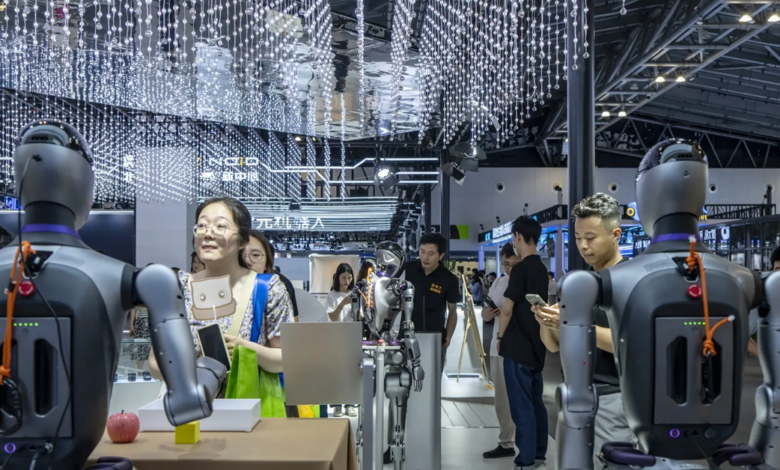
For years, robotics remained a fragmented market divided between industrial automation, academic research and technology demonstrations that were often far removed from economic realities. The year 2026 marks a change in the nature of the industry. Robotics is now entering a phase of accelerated industrialisation, driven by several simultaneous forces: labour shortages, pressure on supply chains, the growing maturity of generative AI, falling embedded-computing costs and rising demand for automation across critical sectors.
The boundary between artificial intelligence and robotics is also becoming increasingly porous. Advances in multimodal models, computer vision and autonomous agents now allow machines to interact with less structured environments, paving the way for a new generation of industrial, logistics and humanoid robots.
Against this backdrop, major robotics events are becoming strategic observatories. They reveal where investment is concentrating, which applications are genuinely reaching industrial scale and which regions are gaining an advantage in the global automation race.
Humanoids Summit 2026, Tokyo, Japan, 28–29 May 2026
The Humanoids Summit is gradually establishing itself as the world’s leading event dedicated to humanoid robots. The choice of Tokyo is no coincidence. Japan retains a central place in the industrial history of robotics and is now seeking to regain the initiative in the face of accelerating competition from the United States and China.
The event reflects a major shift in the market: humanoid robots are no longer regarded solely as technology showcases, but as future multipurpose operators capable of working in warehouses, factories, logistics, healthcare and elderly care.
Demonstrations expected in 2026 will focus not only on locomotion, but also on robots’ ability to manipulate objects, understand complex spoken instructions and interact with dynamic environments. Recent advances in generative AI play a central role here, allowing robots to interpret their surroundings more effectively and adapt their actions in real time.
The summit now attracts the industry’s leading global players, from established Japanese manufacturers to a new generation of US and Chinese companies specialising in humanoid robots, embedded systems and physical AI.
Automate Show 2026, Chicago, 22–25 June 2026
Automate has become North America’s largest robotics trade show and probably the best indicator of the real state of the industrial automation market.
Unlike conferences focused heavily on long-term forecasts, Automate primarily showcases what is already being deployed in factories, logistics centres and industrial infrastructure. The dominant themes in 2026 are expected to include autonomous mobile robots, collaborative robotic arms, AI-enhanced machine vision and systems capable of operating in less structured environments.
The event also illustrates a profound economic shift. Automation is no longer reserved for major industrial groups. Falling costs for sensors, embedded computing and robotics software now allow mid-sized companies to integrate automated systems into their operations.
Automate therefore offers a highly practical view of the sectors in which robotics is finally achieving operational profitability: logistics, e-commerce, materials handling, automotive manufacturing, food production and automated warehouses.
Robotics Summit & Expo 2026, Boston, 27–28 May
The Robotics Summit occupies a different position within the global ecosystem. While Automate showcases automation that has already reached industrial scale, the Boston event focuses more closely on the technologies that will shape the next generation of robots.
The conference brings together engineers, researchers, component manufacturers, deeptech startups and investors to address the industry’s major technological bottlenecks: advanced manipulation, multimodal perception, energy autonomy, edge AI, functional safety and multi-agent coordination.
Above all, the event provides a measure of artificial intelligence’s impact on modern robotics. Advances in multimodal models are gradually transforming how robots learn, navigate and perform complex tasks. This convergence between generative AI and robotics is likely to become one of the decade’s defining industrial shifts.
Boston also remains one of the world’s leading robotics research hubs, thanks to its proximity to MIT and Harvard and a dense ecosystem of startups specialising in advanced robotics.
MACHINA Summit by RAISE 2026, Paris, 7 July
Through MACHINA, the RAISE investment group is seeking to position Paris as a new European hub for intelligent robotics and industrial automation.
The event takes a very different approach from purely technical trade shows. MACHINA examines robotics as an economic, industrial and geopolitical transformation. Discussions focus as much on investment, infrastructure and industrial sovereignty as on the robots themselves.
One of the summit’s central questions is how Europe can establish a position between US dominance in software and China’s industrial strength in robotics manufacturing.
The summit will devote particular attention to:
- reindustrialisation;
- automation of critical infrastructure;
- defence;
- logistics;
- supply chains;
- collaborative robotics;
- the AI infrastructure required for autonomous robotics.
MACHINA also reflects a broader shift in the European debate, where robotics is no longer viewed solely as an innovation issue but as a driver of industrial competitiveness and sovereignty.
What the leading robotics events reveal in 2026
The 2026 robotics conference calendar points to a clear acceleration in the global market. Three trends now shape the sector as a whole.
The first is the convergence of AI and robotics. Advances in multimodal models allow robots to understand their environments more effectively, interact with humans and perform complex tasks with less task-specific programming.
The second is the rapid industrialisation of logistics and manufacturing applications. Warehouses, factories, materials handling and supply chains now account for most large-scale deployments.
The third is geopolitical. The United States remains dominant in software and AI infrastructure, while China is accelerating rapidly in robotics manufacturing and industrial integration. Europe is still attempting to define its position between these two models.
In 2026, robotics is no longer merely a technology issue. It has become a matter of industrial competitiveness, economic sovereignty and productive capacity.