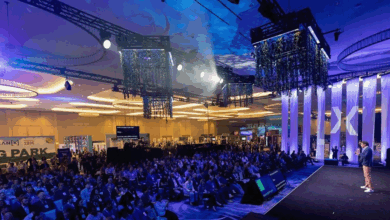
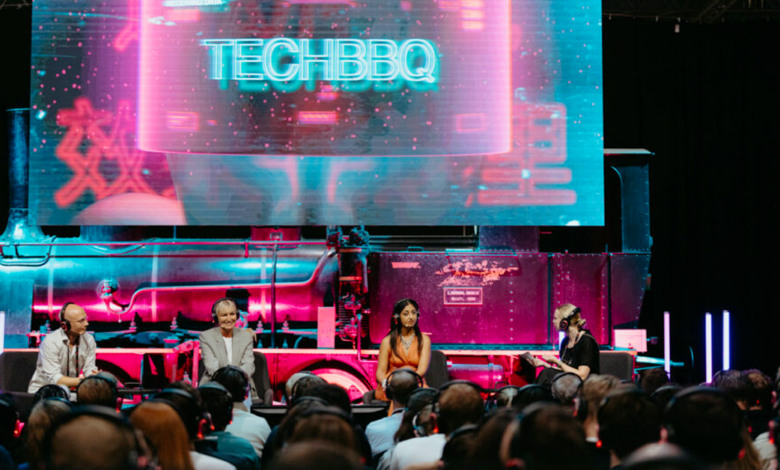
The name has retained something almost homespun about it: a barbecue among neighbours to talk startups. Thirteen years later, more than 10,000 people will converge on Copenhagen’s Bella Center, including 4,000 founders and operators and nearly 2,000 investors from more than 90 countries. The name has not changed. The scale has.
The 2026 edition of TECH BBQ, taking place on 26 and 27 August, tells precisely this story of an ecosystem coming of age. Artificial intelligence, quantum computing, semiconductors, drug discovery, new materials, climate technologies, defence: the programme ranges widely, but one question runs through it from beginning to end: how can recognised scientific excellence be turned into companies capable of going the distance against the United States and China?
This is where the Nordic story meets that of European deeptech as a whole. The laboratories are there. The engineers are excellent. The difficulties come afterwards: financing ten years of development, building a factory, securing a first major customer, raising several hundred million euros without allowing the company’s centre of gravity to shift to the United States. In Copenhagen, startups, sovereign funds, universities, private foundations and policymakers will therefore try to assemble the pieces of this puzzle, knowing that over such long time horizons, every minute counts because the competition is moving so fast.
Voices representing every part of the programme
The speaker line-up gives substance to this ambition. Meredith Whittaker, president of Signal and a prominent critic of the concentration of technological power, will bring particular depth to the discussions. Jacob Lauritzen, CTO of Legora, will illustrate the rise of AI agents applied to the legal sector. Dylan Fox, founder of AssemblyAI, will discuss voice models, while James Hawkins of PostHog and Sabba Keynejad of Veed will offer the perspective of European companies that have built software platforms with international reach.
The programme’s most directly deeptech-focused component will take place on 26 August, with a day devoted to the convergence of artificial intelligence, quantum computing and life sciences: 45 European startups selected across human health, planetary health and advanced technologies. Among the expected speakers is Max Welling, co-founder of CuspAI, a renowned machine-learning researcher and former Vice President of Technology at Qualcomm, now focused on applying generative AI to the discovery of new materials.
The programme extends well beyond software and semiconductors. Pasi Vainikka, co-founder of Solar Foods, embodies another dimension of Nordic deeptech: turning scientific research into an industrial capability. His Finnish company produces Solein, a protein made from microorganisms fed with carbon dioxide, hydrogen and electricity.
Patient capital is still searching for its playbook
In reality, things will begin unofficially on 25 August with an Investor Day at the Maersk Tower, in the heart of Copenhagen’s Innovation District. Around 800 representatives from venture capital funds, corporate venture arms, family offices and business angel networks are expected to attend.
The district is more than simply a venue. It brings together 40,000 researchers, students and employees and already claims to have generated 500 research-based startups. More importantly, it brings investors into close proximity with technology-transfer organisations including DTU Skylab, KU Lighthouse, Beta.Health, Quantum Denmark and the BioInnovation Institute. This proximity is precisely what distinguishes the Nordic model. Universities operate alongside public investors such as EIFO, Denmark’s sovereign investment fund, as well as exceptionally well-funded private foundations including the Novo Nordisk Foundation and the Lundbeck Foundation.
These foundations occupy a distinctive position in the European landscape. They finance fundamental research, scientific infrastructure and support programmes, while also participating, directly or indirectly, in company creation over time horizons that conventional venture capital often struggles to accommodate.
The state returns to the technology conversation
On 27 August, a Policy Stage will bring together entrepreneurs, investors, European officials and representatives of Nordic governments, including Karen Ellemann, Secretary General of the Nordic Council of Ministers; Sigrid Rajalo from Estonia’s Ministry of Economic Affairs; Daragh Brown of the European Investment Fund; Susanne Eskildsen of EIFO; several Danish and European parliamentarians; and Louise Lund Henneberg, Deputy Director of the Danish Ministry of Foreign Affairs’ TechPlomacy department. Denmark was one of the first countries to formally treat technology as a diplomatic issue, on a par with trade, security and energy.
The discussions are expected to be highly practical: a potential Nordic fund of funds, pension-fund investment in technology, startup taxation, talent attraction, and the European “28th regime” initiative, designed to provide innovative companies with a common legal framework beyond the EU’s 27 national systems.
India and Africa as new growth markets
For countries whose domestic markets remain relatively small, internationalisation is not a late-stage option: it is built into the model from the outset. Following VivaTech, TechBBQ is organising a Nordic–India Startup Summit focused on the complementarities between Nordic innovation and India’s capabilities in talent, industrial production, digital infrastructure and market access. A second programme, the Nordic–Africa Startup Summit, will connect Nordic and African ecosystems around healthcare, agritech, climate and artificial intelligence.
Why TechBBQ is worth the trip
TechBBQ is not a specialised deeptech conference in the mould of Hello Tomorrow. Its programme combines artificial intelligence, SaaS, fintech, climate, life sciences, public policy and growth advice. For an entrepreneur or investor, it offers an opportunity to meet not only venture capital funds, but also universities, foundations, sovereign funds and European institutions. For policymakers, it provides a concrete view of how Nordic countries are attempting to coordinate research, financing and industrial policy.
For a French observer in particular, TechBBQ offers a change of perspective. The Nordic model rests on the density of relationships between very different types of actors. The event is also less saturated with media attention than VivaTech or Slush, making conversations more accessible, provided meetings are arranged in advance. And in the current environment, it is also worth securing your trip from a cybersecurity standpoint.