UK-based WAYVE raises $1.2 billion to make its onboard AI a standard in autonomous driving
To contact us: editorial@fw.media

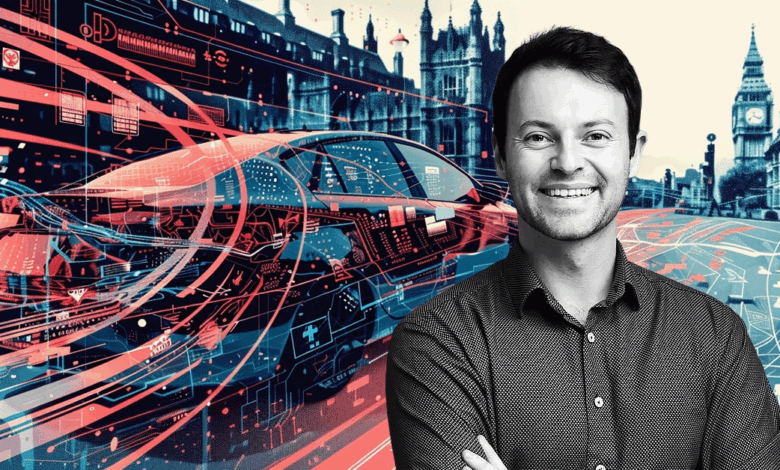
British startup WAYVE has raised $1.2 billion at an $8.6 billion valuation. The round could reach $1.5 billion through an additional $300 million commitment from UBER, contingent on the deployment of robotaxis, beginning in London. The deal places WAYVE among Europe’s best-capitalised autonomous mobility companies.
An end-to-end AI architecture without HD maps
Founded in 2017 by Alex Kendall, WAYVE has chosen to build its autonomous driving system around a single end-to-end neural network, without relying on high-definition maps.
Its approach involves learning to drive from real-world data collected on public roads. Perception, environmental understanding and decision-making are integrated into the same model. This architecture differs from traditional modular systems, which separate perception, planning and control. It follows a logic similar to the one adopted by TESLA, although the two companies operate under significantly different business models.
WAYVE also positions its technology as hardware-agnostic: its software can work with different sensors and run on chips already integrated by automakers. The latest version of its platform, Gen 3, nevertheless relies on the NVIDIA DRIVE AGX Thor environment.
Two products built on the same software architecture
WAYVE’s technology is available in two versions:
- an “eyes-on” system designed to enhance advanced driver-assistance systems;
- an “eyes-off” system targeting Level 4 capabilities, allowing vehicles to drive autonomously in certain urban or motorway environments.
The company does not intend to operate fleets directly, as WAYMO does, or manufacture its own vehicles. Its objective is to sell an “embodied AI” layer to automakers and mobility platforms. The strategy is designed to maximise the technology’s reach through industrial partners already established across global markets.
Automakers and investors align around the same platform
The funding round brings together a diverse group of venture capital firms, institutional investors, technology companies and automakers.
They include MERCEDES-BENZ, NISSAN and STELLANTIS, all of which plan to integrate WAYVE’s technology into their vehicles. NISSAN has already announced that it intends to use the platform to enhance its driver-assistance systems from 2027.
On the technology side, MICROSOFT and NVIDIA are among the startup’s long-standing backers. NVIDIA has maintained a close development relationship with WAYVE for several years. This alignment between a compute provider and an AI software company reflects the consolidation taking place around the hardware platforms required to run increasingly complex models.
UBER becomes both an operational and financial partner
UBER’s additional commitment, contingent on the deployment of robotaxis, gives the funding round an operational dimension. The platform plans to conduct commercial trials with vehicles running WAYVE’s software and has mentioned a potential rollout across more than ten markets.
For UBER, the objective is to secure access to autonomous driving technology without internalising the full cost of research and development. For WAYVE, the partnership offers a route to rapid scale through an already established global mobility network.