RIVERCELL producing the data to build a virtual cell
To contact us: editorial@fw.media

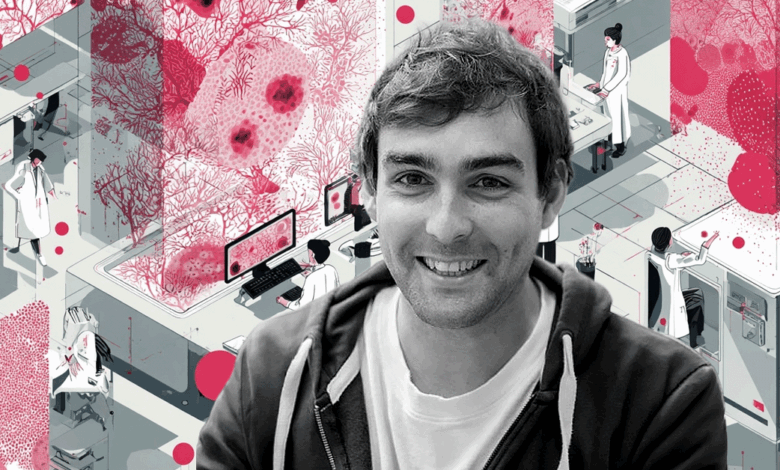
The Paris-based startup has announced around €22.4 million in seed funding to develop a biological data platform and models capable of predicting how human cells respond to treatments. Its strategy rests on controlling the experimental data production needed to train AI, in a field where data quality and the validation of predictions remain decisive.
A cell exposed to a drug changes. Some genes become more active, others less so; its behaviour may shift, and its response evolve over time. For pharmaceutical researchers, understanding this trajectory helps formulate a hypothesis about how a treatment works. Predicting it could help them choose which experiments to run.
Rivercell is building its approach around this connection between observation and simulation. The Paris-based startup plans to produce data at scale on how human cells respond to drugs and genetic modifications, then use it to train a “virtual cell”: an AI model designed to predict those responses computationally.
The strategy extends beyond developing an algorithm. Rivercell intends to build the experimental infrastructure on which it depends, bringing together measurement instruments, an automated laboratory and models. The advantage it seeks lies in collecting biological information that is difficult to obtain, then demonstrating that this information makes predictions more useful to researchers.
Tracking cellular responses over time
Rivercell describes its approach as combining single-cell, interventional, multimodal and time-resolved data. Behind these terms lies an experimental programme: observing individual cells, measuring their response to a specific intervention, combining different types of measurements and understanding how that response evolves.
Working at the single-cell level preserves differences that an average can conceal. Interventional data documents the consequences of exposure to a molecule or a genetic modification. The time dimension should help distinguish a temporary response from a lasting change, while combining several measurements can provide a richer representation of a cell’s state.
“The missing piece is the data: how cells evolve over time and under treatment, observed from multiple angles and at several levels, and captured at scale,” says Yann Fleureau, co-founder and CEO.
Rivercell’s comparison with AlphaFold conveys the scale of its ambition. Predicting a cell’s behaviour, however, adds a further challenge to the question of molecular structures: modelling a dynamic system whose responses depend on both context and intervention.
Building the laboratory that trains the model
To generate these observations, Rivercell is developing a proprietary platform and expanding its biology laboratory in Paris. The company argues that existing instruments were not designed for the requirements of its virtual cell programme and wants to develop measurement capabilities suited to the task.
This integration should give it control over protocols, the repetition of experiments and data quality. It may also allow experimental campaigns to be designed around the difficulties encountered by the models. Over time, predictions could help select the next experiments, whose results would in turn provide further training data.
This loop could create an advantage that builds over time. It depends, however, on each new experimental campaign contributing useful information. Accumulating similar observations does not guarantee that a model will predict the response to a new molecule or in a different biological context.
The strategy also requires funding several activities simultaneously: instrumentation, consumables, biology teams, data engineering and computing.
From cardiac diagnostics to biological prediction
The founders’ backgrounds help explain this combination of technology and experimentation. Yann Fleureau co-founded Cardiologs, which uses AI to help interpret electrocardiograms, before its acquisition by Philips. Alven, now a Rivercell investor, had already led a funding round for Cardiologs in 2020.
Éric Durand, who joined Rivercell in 2026 as co-founder and chief scientific officer, led oncology data science at Novartis before holding leadership roles at Owkin. He also co-founded Bioptimus. His experience connects biological models with the questions raised by drug development. Charlotte Bunne of EPFL and Fabian Theis of Helmholtz Munich are joining the scientific advisory board.
A race spanning Europe, the United States and China
Rivercell enters a field where proprietary data, laboratories and AI already underpin several strategies. In the United States, Recursion is developing a platform that integrates automated experiments, cellular imaging, gene expression measurements and models. Insitro also combines experimental data and machine learning to identify biological mechanisms and develop treatments.
In Europe, the UK’s Shift Bioscience offers a close methodological comparison. Its platform combines measurements of ageing with a virtual cell trained on proprietary genetic perturbation data. Its programme focuses on ageing and cellular rejuvenation, whereas Rivercell describes an architecture applicable across several therapeutic areas.
In France, Bioptimus is developing foundation models for biology. Its STELA programme organises the generation of multimodal data combining tissue, molecular measurements and clinical information. The overlap lies in models and data; the experimental scope differs. Helical, which emerged from Luxembourg’s ecosystem and also operates in London, focuses more on their use by pharmaceutical teams, offering a virtual laboratory that allows models to be adapted to clients’ data.
China is also active in cellular prediction. BioMap’s team won the Virtual Cell Challenge 2025, organised by Arc Institute, with xTrimoSCPerturb. That result concerns a specific evaluation task and does not demonstrate a general ability to simulate a cell. CellFM, developed by Chinese academic teams with Huawei and Singleron, provides another reference point for single-cell data analysis and perturbation prediction.
Alongside these commercial competitors stand the scientific resources of Arc Institute and the Chan Zuckerberg Initiative. Their data, models and evaluation tools can support researchers while raising the performance expected of commercial platforms.
Finding the first pharmaceutical use case
Rivercell presents its platform as independent of any particular disease indication, with potential applications in oncology, immunology, rare diseases and cardiometabolic disorders. That breadth represents a development ambition. Commercial adoption will depend on addressing problems specific enough for the value of its predictions to be measured.
A virtual cell could help select biological targets, compare molecules, explore combinations or guide an experimental campaign. For a pharmaceutical company, the benefit will need to translate into better-informed decisions, shorter timelines or fewer experiments.
The business model has not been specified. Data sales, access to models, research collaborations and the development of therapeutic assets are possible routes, each with different funding requirements and timelines. Rivercell has not disclosed named clients, revenue or a commercial launch schedule in this announcement.
Its platform will also need to find a place alongside pharmaceutical companies’ internal capabilities and the experimental service providers they already use. A collaboration focused on a clearly defined problem would provide an initial measure of its value, while testing the relevance of an architecture intended to span several diseases. The wider challenge of embedding AI in pharmaceutical operations is also visible in Biolevate’s effort to connect scientific knowledge, evidence and validation within drugmakers, although the two companies address different stages of the workflow.
The next experiments will provide the proof
Scientific evaluation remains decisive. A useful model must predict responses in situations absent from its training data and be compared with existing methods, including simple statistical approaches.
The debate is moving quickly. A study published in Nature Methods in August 2025 concluded that the models examined did not outperform simple baselines on the tasks tested. A paper published on 1 October 2026 in Nature Biotechnology shows that models can outperform those baselines when evaluation criteria better capture biologically relevant effects. It nevertheless leaves open the question of unfamiliar cellular contexts.
For Rivercell, the demonstration will therefore need to connect predictive accuracy with experimental usefulness. A response observed in a cell in the laboratory is also insufficient to establish a treatment’s efficacy in a patient. Interactions between tissues, drug exposure and differences between individuals add further layers of difficulty. Further downstream, Novadip’s progress towards clinical and regulatory validation of its cell therapy illustrates the additional evidence required before a biological technology can become a treatment.
A credible first step would be to show that the platform helps a partner select hypotheses subsequently confirmed by new experiments. The ambition of a virtual cell would then take concrete form in researchers’ work.
Founded in Paris in the summer of 2025 by Yann Fleureau, and joined in 2026 by Éric Durand as co-founder and chief scientific officer, Rivercell announced $25 million in seed funding, equivalent to around €22.4 million, on 7 October. The round was led by HV, with participation from HCVC, Alven and Bpifrance Digital Venture, alongside individual investors. The proceeds will fund the development of its proprietary data generation platform, the expansion of its Paris laboratory and the launch of its virtual cell programme.